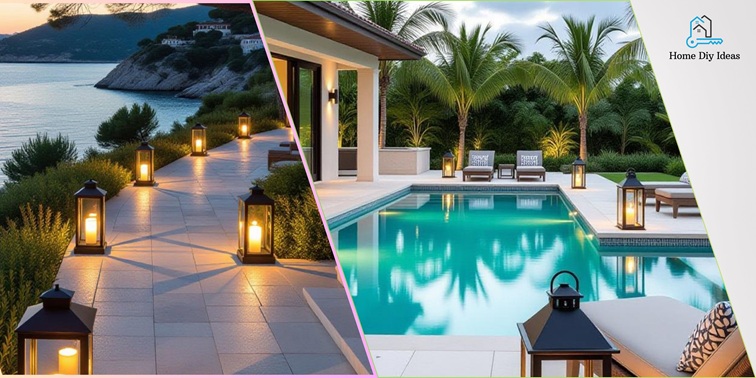

When I first envisioned transforming my backyard into a seaside-style sanctuary, nautical landscape lighting felt like the missing piece. Not just pretty lights—but fixtures that echo the rugged charm of maritime life, shine safely in outdoor conditions, and tie design with function. In this guide, I’ll show how to bring that coastal-inspired aesthetic to your outdoor space, with expert-backed tips and first-hand insights.
What Is Nautical Landscape Lighting?
Defining the Style
“Nautical” in outdoor lighting goes beyond anchors and ship wheels—it’s about evoking the character of the coast. Think of weathered metals, rope textures, and lantern-inspired fixtures that feel at home on a pier or boardwalk.
Common Nautical Elements:
- Materials: Brass, marine-grade stainless steel (316), weathered bronze, or copper
- Design details: Rope wrapping, cage lanterns, porthole shapes, seeded glass
- Colors: Navy, white, driftwood gray, sand tones
- Finishes: Matte or aged metals that withstand coastal weather
Nautical landscape lighting merges this maritime aesthetic with functional landscape design—lighting pathways, trees, patios, or water features in style.
Why Choose Nautical Lighting for Outdoor Spaces
- Creates a coastal retreat atmosphere, even inland
- Complements water features, palms, or stone paths
- Uses marine-grade materials ideal for salt or humidity
- Adds both ambience and safety to outdoor living zones
- Increases curb appeal and nighttime usability
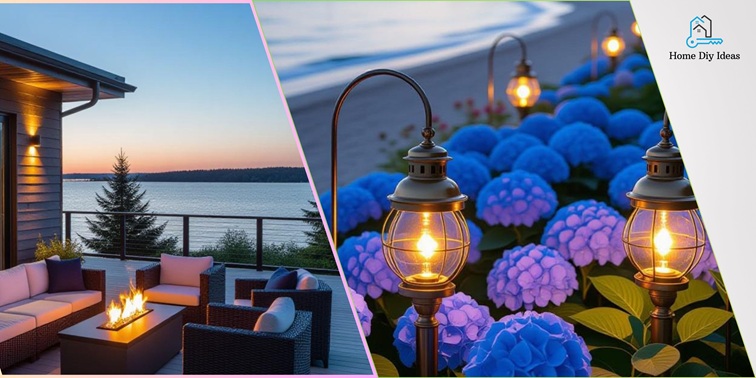
Key Considerations Before Buying or Installing
Materials & Durability
Outdoor conditions can be harsh—especially near coasts. Choose fixtures designed for longevity.
| Feature | Why It Matters |
| Marine-grade stainless or brass | Resists corrosion and salt air damage |
| Wet-location or IP-rated fixtures | Ensures safety in rain or humidity |
| Powder-coated finish | Prevents peeling or rust |
| Sealed gaskets/lenses | Blocks moisture from internal wiring |
| Low-voltage, LED compatible | Energy-efficient and longer lifespan |
Style & Design Matching
- Maintain cohesive finishes—bronze, brass, or nickel.
- Select fixtures that echo ship-deck or dock-side designs.
- Stick to warm white (2700–3000 K) light for cozy ambience.
- Mix wall sconces, path lights, and accent lights in the same metal tone.
Lighting Purpose & Layout
Identify what you want to highlight:
- Safety: Paths, stairs, and entryways
- Ambience: Deck, patio, or garden edges
- Accent: Trees, palms, sculptures, or fountains
How to Plan & Install Nautical Landscape Lighting
Step 1 – Audit Your Yard
- Walk around at dusk and mark dark or unevenly lit spots.
- Identify key features—trees, pathways, water areas, and walls.
- Sketch zones: Pathways, Features, Seating, and Entryways.
Step 2 – Choose Fixtures & Placement
Placement Checklist:
- Pathway lights: 6–8 feet apart, 12–18″ high
- Uplights: At tree bases or under palms for drama
- Downlights: From pergolas or branches for a “moonlight” glow
- Wall sconces: Beside doors or patios for symmetry
- Water features: Submersible or edge-mounted waterproof LEDs
Style Tips:
- Use rope or cage accents for an authentic dock-side feel.
- Choose aged bronze or copper finishes that develop a natural patina.
- Layer lights at different heights for visual depth.
Step 3 – Installation Basics
If you’re DIY-savvy, go low-voltage (12 V).
- Install a transformer and timer for automatic operation.
- Lay underground cables neatly along the layout sketch.
- Test fixtures before burying wires.
- Always follow manufacturer guidelines and local codes.
(Tip: If wiring feels intimidating, hire a licensed electrician to ensure safe connections.)
Step 4 – Maintain & Protect
Even the best fixtures need care.
- Wipe lenses quarterly to remove salt and dirt.
- Tighten loose parts or corroded screws.
- Replace burned bulbs with sealed LED models.
- Before storm seasons, check fixture stability and cable protection.
Design Inspiration & Creative Ideas
- Rope-Wrapped Posts: Wrap the base of a bollard with natural rope for texture.
- Anchor or Porthole Accents: Small details add big personality.
- Patina Finishes: Bronze or copper that ages gracefully under weather.
- Seeded Glass Lanterns: Mimic bubbles and watery reflections.
- Underwater Lighting: Highlight fountains, ponds, or pool edges.
- Complementary Décor: Add driftwood, white planters, or navy cushions to extend the coastal theme.
Quick Reference Table: Lighting by Zone
| Zone | Fixture Type | Nautical Style Tip |
| Pathways | Low-voltage bollards or post lights | Rope detail or bronze finish |
| Patio/Deck | Wall sconces or cage lanterns | Warm light, weathered metal |
| Trees/Plants | Uplights or downlights | Hidden fixtures for natural shadows |
| Water Features | Submersible or edge LEDs | Reflective glow over water |
| Entryway | Pendant lanterns | Anchor or cage motif |
Frequently Asked Questions
Yes—just ensure they’re wet-rated and styled with nautical finishes like rope, cage, or patina bronze.
Use warm white (2700–3000 K) to mimic cozy lantern glow.
Around 6–8 feet, depending on fixture brightness and beam width.
Absolutely. Low-voltage (12 V) systems are safer, energy-efficient, and easy to install yourself.
Stick to similar finishes, avoid mixing metals, and repeat design motifs (anchors, rope, cage lanterns) throughout the yard.
Conclusion
Ready to give your yard a coastal glow? Start by auditing your landscape tonight—note where light could enhance mood or safety. Choose two nautical fixtures that inspire you and install them thoughtfully. Within a week, your evenings will feel transformed into seaside serenity.


