

Lighting isn’t just about illumination—it’s about creating atmosphere. When I design outdoor spaces, contemporary landscape lighting plays a key role in shaping mood, enhancing safety, and elevating curb appeal. With sleek fixtures, layered lighting, and smart technology, your landscape can look just as captivating at night as it does by day.
In this guide, I’ll break down the most effective modern lighting strategies, design principles, and fixture choices that professionals use to achieve a high-end, cohesive outdoor look.
The Essence of Contemporary Landscape Lighting
Contemporary design is clean, minimal, and functional. In landscaping, that means lighting that highlights architecture, texture, and movement without overwhelming the space.
Core Principles
- Simplicity: Fewer, more deliberate fixtures for a clean aesthetic.
- Functionality: Every light serves a purpose—safety, accent, or ambiance.
- Technology: Integration with smart systems for control and efficiency.
- Contrast: Combining shadow and light to add visual depth.
Types of Contemporary Landscape Lighting Fixtures
| Fixture Type | Best For | Design Impact |
| In-ground / Recessed Lights | Driveways, pathways, patios | Seamless illumination with minimal visual clutter |
| Bollard Lights | Garden paths, borders | Architectural look that doubles as design elements |
| Wall Washers | Facades, fences, walls | Creates a soft glow that defines structures |
| Spotlights | Sculptures, trees, features | Dramatic focus and dimension |
| LED Strip Lighting | Decks, steps, benches | Sleek, continuous lines for a futuristic look |
| Pendant or Sconce Lights | Outdoor dining zones | Adds warmth and intimacy while maintaining modernity |
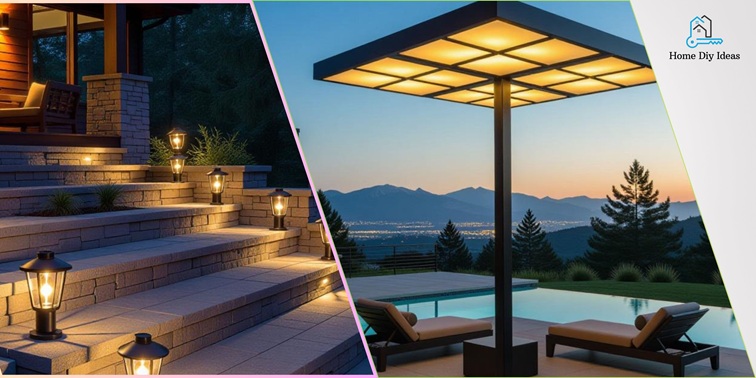
Design Strategies for a Sleek, Modern Look
1. Layer Lighting for Dimension
Just as indoor lighting has ambient, task, and accent layers, your outdoor design should too.
- Ambient: Soft illumination through bollards or wall washers.
- Task: Focused lighting on paths or seating areas.
- Accent: Highlight plants, sculptures, or textures.
Pro Tip: I often use dimmable LED drivers to fine-tune brightness at different times of night.
2. Use Light to Define Architecture
Contemporary landscapes thrive on geometric precision.
- Install linear LED strips along retaining walls or stairs.
- Use uplighting to accentuate vertical surfaces or modern columns.
- Employ downlighting under overhangs for clean light without glare.
This approach visually “frames” your architecture, making outdoor structures feel intentional and modern.
3. Integrate Smart and Energy-Efficient Solutions
Modern lighting is about control and conservation:
- Smart Controls: Sync with apps or voice assistants for scheduling and dimming.
- Motion Sensors: Add convenience and security while reducing energy waste.
- Solar LEDs: Ideal for eco-conscious homeowners.
- Low-Voltage Systems: Reduce energy costs while maintaining brightness.
I’ve seen homes cut outdoor energy usage by 40% simply by switching to smart LEDs.
4. Choose Materials That Match Modern Design
Contemporary fixtures often feature:
- Matte black, stainless steel, or brushed aluminum finishes
- Minimalist geometric shapes (cubes, cylinders, or lines)
- Durable, weather-resistant materials for longevity
Avoid overly ornate fixtures—simplicity and precision define the modern aesthetic.
Step-by-Step: How to Plan Your Contemporary Landscape Lighting
- Assess Your Space: Note areas that need illumination—entrances, steps, garden beds, or art features.
- Define the Mood: Do you want warm hospitality or cool modern elegance?
- Sketch a Lighting Map: Mark fixture types and beam angles.
- Select Fixtures: Match finishes and color temperature (2700K–3000K for warm, 4000K for cool).
- Install Thoughtfully: Conceal wires, avoid glare, and test visibility at night.
- Fine-Tune: Adjust angles and intensity to balance brightness across the yard.
Common Mistakes to Avoid
- Over-lighting: Too much brightness flattens the mood.
- Ignoring Shadows: Shadows create depth—use them strategically.
- Mixing Styles: Stick to one design language for cohesion.
- Neglecting Maintenance: Clean lenses and check wiring regularly.
Real-World Design Example
When I redesigned a client’s pool patio, we used:
- Recessed deck lights for perimeter glow
- Wall washers to illuminate textured stone
- Smart bollards on a dimmer circuit for adjustable ambiance
The result was a minimalist, luxurious space that looked like a boutique resort—functional, safe, and breathtaking after sunset.
Quick Checklist for a Modern Lighting Layout
✅ Use consistent color temperatures
✅ Hide fixtures whenever possible
✅ Add lighting at multiple heights
✅ Include motion and dimming controls
✅ Test your lighting at night before final installation
FAQs: Contemporary Landscape Lighting
Cool white (3500K–4000K) gives a crisp, contemporary glow. Warm white (2700K–3000K) feels more inviting and is great for seating areas.
Opt for LED fixtures with smart or solar controls, and use low-voltage systems to reduce consumption.
For complex designs or hardwired systems, yes. Professionals ensure proper voltage, wiring, and fixture placement.
Clean lenses every few months and inspect for corrosion or loose connections at least twice a year.
Conclusion
Contemporary landscape lighting isn’t just functional—it’s transformative. With the right design strategy, you can frame your home’s best features, enhance safety, and create a seamless outdoor experience that feels sophisticated and current.


