If you’ve ever watched your water bill spike during summer—or noticed your grass turning brown despite constant watering—you’re not alone. Many homeowners face the same struggle: keeping a lush yard while conserving water. That’s where drought tolerant landscaping comes in. It’s not just about survival during dry spells; it’s about designing a landscape that thrives naturally, saves money, and supports the environment.
In this guide, I’ll walk you through what works, what doesn’t, and how to make your outdoor space water-efficient without sacrificing beauty. I’ll also highlight gaps I found in top-ranking competitor articles, so you get a deeper, more actionable approach than the average “list of ideas.”
Why Drought Tolerant Landscaping Matters
Traditional lawns demand constant watering, fertilizing, and mowing. In contrast, a drought tolerant landscape:
- Cuts water use by up to 50% or more.
- Reduces maintenance needs—less mowing, fertilizing, and pest control.
- Supports biodiversity by using native and pollinator-friendly plants.
- Withstands heat and drought stress far better than conventional lawns.
- Saves money through lower water bills and reduced upkeep.
Drought tolerant landscaping is a long-term investment that benefits both your home and the planet.
Step 1: Assess and Plan Your Site
Before choosing plants or materials, understand your site’s conditions. This is the foundation for water-smart design.
Site Assessment Checklist
| Item | What to Look For | Why It Matters |
| Sun exposure | Note full sun, part shade, full shade zones | Determines plant placement |
| Soil type & drainage | Identify clay, sandy, or loamy soil | Affects plant selection and water retention |
| Slope & runoff | See where water collects or flows | Helps with grading and erosion control |
| Existing lawn area | Measure how much turf to remove or convert | Reduces high-water sections |
| Irrigation system | Inspect current setup | Allows upgrades to drip or zone systems |
| Local climate | Know rainfall and drought cycles | Guides plant and mulch choice |
Design Considerations
- Hydrozone your yard: Group plants by water needs to maximize irrigation efficiency.
- Reduce or eliminate turf: Replace with groundcovers, mulch beds, or gravel.
- Use hardscapes strategically: Permeable pavers, stone, or decomposed granite improve drainage.
- Create a phasing plan: Redesign your landscape in manageable stages.
- Plan for maintenance: Every low-water garden still needs some upkeep—especially in year one.
Step 2: Choose Plants and Materials Wisely
Best Plant Types for Drought Tolerance
- Native plants adapted to your region’s rainfall.
- Deep-rooted perennials that draw moisture from deeper soil.
- Ornamental grasses like blue fescue or feather reed grass.
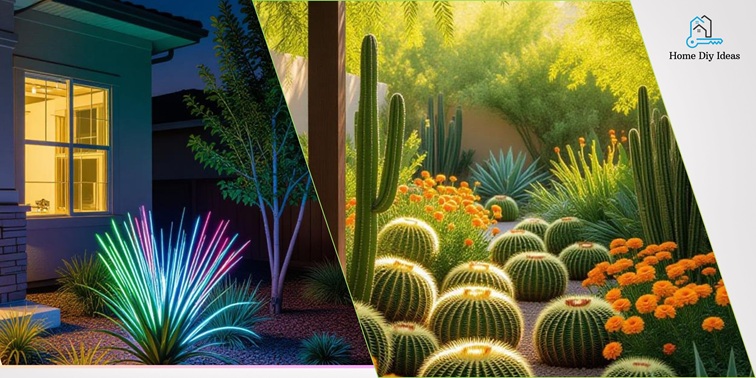
- Succulents and cacti for texture and resilience.
- Mediterranean herbs such as lavender, sage, and rosemary.
Smart Hardscape and Mulch Options
- Mulch: Organic (bark, compost) or inorganic (gravel, pebbles) to reduce evaporation.
- Permeable surfaces: Allow rainwater to soak in and prevent runoff.
- Boulders and terraces: Stabilize slopes and add visual interest.
Expert Tips
- Choose plants labeled “drought tolerant after establishment.” They still need water initially.
- Mix textures and heights for a natural look.
- Match plants to microclimates—sun-loving plants in hot zones, shade-tolerant ones under trees.
- Avoid large monocultures; variety improves resilience.
Step 3: Installation – Turning Plans into Reality
Step-by-Step Guide
- Remove or reduce turf: Replace high-water lawns with groundcovers, gravel, or native beds.
- Improve soil: Loosen compacted soil and mix in compost to enhance drainage and water retention.
- Create hydrozones: Group plants by water needs and adjust irrigation lines accordingly.
- Install efficient irrigation: Use drip systems or micro-sprayers with timers.
- Add hardscapes and mulch: Lay pathways and apply 3–4 inches of mulch around plants.
- Plant strategically: Place drought-tolerant species with proper spacing for airflow and growth.
- Water deeply but infrequently: Encourage roots to grow downward for long-term resilience.
Implementation Timeline
| Timeframe | Key Actions | Focus Points |
| Weeks 1–4 | Turf removal, soil prep, hardscape installation | Ensure proper grading and drainage |
| Months 1–3 | Planting and irrigation setup | Maintain consistent watering until roots establish |
| Months 3–12 | Gradual reduction in watering | Train plants to tolerate drier conditions |
| Year 2+ | Maintenance and adjustments | Minimal irrigation except in extreme drought |
Step 4: Maintenance and Troubleshooting
Regular Maintenance Checklist
- Reapply mulch yearly to retain moisture.
- Inspect irrigation lines for leaks or clogs.
- Weed early and often to reduce competition.
- Prune dead or damaged growth to improve airflow.
- Add compost every 2–3 years for soil health.
Common Issues and Fixes
| Problem | Likely Cause | Solution |
| Plants wilting | Over- or under-watering | Check soil moisture before adjusting schedule |
| Water pooling | Poor drainage | Add organic matter or create swales |
| High weed growth | Insufficient mulch | Maintain at least 2–3 inches of coverage |
| Unexpected high water use | Old sprinkler settings | Reprogram irrigation timers |
Water Savings at a Glance
| Landscape Type | Water Use | Maintenance Level | Notes |
| Traditional Lawn | 100% baseline | High | Frequent mowing, watering, fertilizing |
| Partial Conversion | 60–70% baseline | Moderate | Combines turf and drought zones |
| Full Drought-Tolerant Design | 30–50% baseline | Low | Best long-term water and cost savings |
FAQs: Homeowner Concerns
Not at all. Drought tolerant gardens can be colorful, lush, and dynamic with proper plant layering.
Usually one to two growing seasons. Regular watering helps roots establish deeply before reducing irrigation.
No. Even drought-tolerant landscapes need initial watering and occasional deep watering during extended dry spells.
They can cost slightly more initially, but water and maintenance savings make up for it over time.
Absolutely. Any region can benefit from water-smart planting and reduced turf areas.
Conclusion
Transforming your yard into a drought tolerant landscape isn’t just a sustainable choice—it’s a lifestyle upgrade. You’ll save water, reduce upkeep, and enjoy a beautiful, resilient outdoor space that thrives with minimal effort.