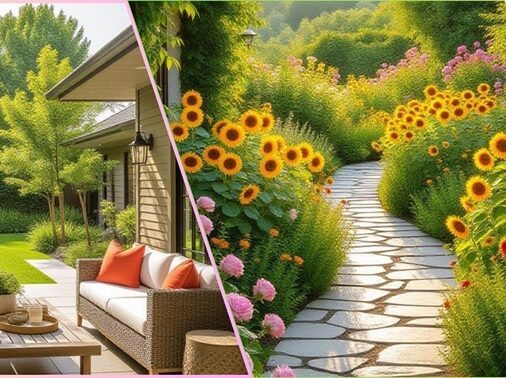
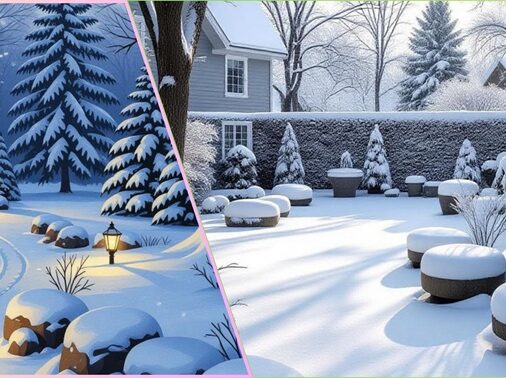
As the crisp air settles in and leaves turn from green to gold, amber, and scarlet, I always feel the urge to bring that autumn magic into my landscape—or even paint it. If you’re like me, you love the idea of transforming your front yard (or backyard) into a canvas of rich fall color. In this article, I’ll walk you through how to design and plant a “fall landscape painting”—a home garden that looks like a painting in full autumn dress.
We’ll apply actionable, easy-to-follow steps, include checklists and tables for clarity, and focus on creating a space that reflects both strong design and the vivid fall palette.
Why I Call It “Fall Landscape Painting”
When I use the phrase “fall landscape painting,” I’m not just talking about painting on canvas. I mean treating your yard like a living artwork. Every plant, path, and lighting choice becomes a brushstroke.
Autumn’s natural palette—gold, copper, russet, amber, and crimson—gives you all the pigment you need. Your job is to compose them harmoniously, with contrast, texture, and flow.
Planning Your Autumn Canvas
1. Assess Your Site
Before planting anything, walk your yard with a notebook or phone camera. Use this checklist:
- Sun and shade patterns
- Existing trees and shrubs (and how their colors change)
- Drainage, slopes, or low spots
- Views from the street and entryway
- Hardscape features like paths, driveways, or walls
Understanding your “canvas” helps you decide where to place your boldest colors and focal points.
2. Choose Your Autumn Color Palette
Think like an artist. Select three dominant hues and one neutral.
| Dominant Colors | Accent / Neutral |
| Burnt orange, rusty red | Golden yellow highlights |
| Bronze or coffee brown | Deep burgundy stems |
| Russet foliage | Evergreen or slate-gray structure |
Pro Tip: Shrubs like Fothergilla or Oakleaf Hydrangea offer spectacular fall hues and hold structure year-round.
3. Composition and Structure
Design your yard like a painting:
- Focal point: Choose one standout tree or feature to anchor the view.
- Layering: Tall trees behind, mid-height shrubs in front, ground covers at the edge.
- Movement: Use curved borders or stepping paths to lead the eye through the garden.
- Repetition: Repeat colors or textures for balance and rhythm.
- Contrast: Mix rough and smooth foliage, bright and muted tones.
This visual rhythm is what makes your “painting” come alive.
Eight Practical Fall Landscape Painting Ideas
1. Plant a Bold Accent Tree
Choose a tree with fiery foliage—like a Japanese maple, sugar maple, or dogwood. Place it where it draws attention from the street or entry.
2. Add Shrubs for Layered Color
Select shrubs that show progressive color changes—such as Fothergilla, Viburnum, or Oakleaf Hydrangea—and cluster them for visual impact.
3. Use Ornamental Grasses for Texture
Grasses like switchgrass, fountain grass, or miscanthus bring bronze tones and graceful movement to the landscape.
4. Brighten with Fall Perennials and Annuals
Plant mums, asters, or black-eyed Susans near walkways for cheerful pops of color that mimic painterly highlights.
5. Integrate Hardscape as Design Lines
Use natural stone, warm pavers, or terracotta edges to frame planting beds. Hardscapes define space—just like a frame defines a painting.
6. Create Porch or Container “Mini Canvases”
Use containers filled with fall plants, gourds, or small grasses. These micro-compositions echo your overall theme.
7. Enhance with Lighting
Warm white LED path lights or tree uplights make autumn colors glow even after sunset. Lighting adds depth and shadow, like brushwork on canvas.
8. Follow a Seasonal Maintenance Checklist
| Task | Timing |
| Prune early-summer shrubs | Early fall |
| Mulch and feed beds | Mid-fall |
| Rake leaves selectively | Ongoing |
| Water shrubs until ground freezes | Late fall |
| Winterize irrigation and pots | Before frost |
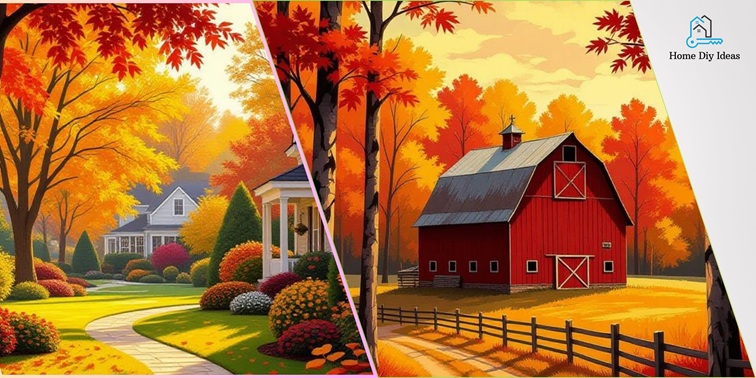
Sample Design Layout: Front Yard “Autumn Canvas”
| Area | Feature / Plant | Color Effect | Design Tip |
| Entry Walkway | Pots with mums & grasses | Orange-gold pops | Replace seasonally |
| Center Bed | Japanese maple | Scarlet canopy | Main focal point |
| Front Foundation | Hydrangeas + evergreens | Maroon and green balance | Maintain symmetry |
| Border Edge | Ornamental grasses | Bronze sway | Adds texture and motion |
| Accent Lighting | Warm LED uplights | Enhances warmth | Use low voltage |
FAQ: Fall Front Yard Landscaping
Begin in late summer or early fall. Cooler temperatures help new plants root easily before winter.
Choose shade-tolerant shrubs like Oakleaf Hydrangea or Witch Hazel, which still offer brilliant fall color.
Focus on bark texture, evergreen structure, and ornamental grasses for winter appeal.
Yes. Limit your color palette and use containers or vertical elements to create depth.
Absolutely. A well-composed, colorful front yard can improve curb appeal and add measurable home value.
Conclusion
Your fall landscape doesn’t have to be a static scene—it can evolve and inspire every day of the season. By planning your palette, layering your plants, and framing your space with structure and light, you’ll create a true “fall landscape painting” that feels warm, balanced, and timeless.