

If you’re looking to give your garden or yard a clean, professional edge that lasts for decades, steel landscape edging might just be the unsung hero you need. It’s the secret ingredient behind many designer landscapes — sleek, sharp lines that define lawns, pathways, and garden beds without the hassle of constant upkeep.
Having installed countless edging systems over the years, I’ve learned one thing: when you want results that look and last like a pro’s work, steel edging outshines almost everything else.
Why Choose Steel Landscape Edging?
Top-ranking competitor pages highlight durability and aesthetics, but many overlook practical performance and installation advantages. Let’s bridge that gap.
Unmatched Durability
Steel edging withstands the test of time — unlike plastic or wood, it won’t crack, warp, or rot. It endures freeze-thaw cycles and keeps its shape through years of weather exposure.
Key Benefits:
- Rust-resistant when properly coated or galvanized
- Handles heavy lawn equipment without bending
- Maintains sharp lines for 20+ years with minimal maintenance
Professional Aesthetic Appeal
Steel gives that “finished” look — crisp, defined borders that separate turf from mulch, stone, or gravel. Whether in a minimalist modern garden or a rustic backyard, it blends seamlessly with your design.
Pro Tip: For a contemporary edge, go for black powder-coated steel; for a more natural blend, raw steel develops a beautiful rustic patina over time.
Comparing Steel to Other Landscape Edging Materials
| Material | Durability | Maintenance | Appearance | Cost (per linear foot) | Lifespan |
| Steel | Excellent | Very Low | Clean, Professional | $$ | 20–40 years |
| Aluminum | Good | Low | Sleek but lighter | $$ | 15–25 years |
| Plastic | Poor | Moderate | Inconsistent | $ | 5–10 years |
| Concrete | Excellent | Low | Heavy, Rigid | $$$ | 20–50 years |
| Wood | Fair | High | Natural | $ | 5–15 years |
Where to Use Steel Landscape Edging
You can use steel edging to create structure and flow throughout your landscape. Here are some of the most popular applications:
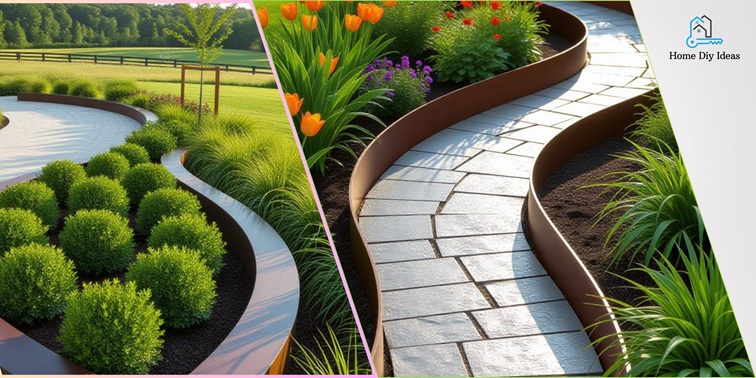
- Garden Bed Borders – Keep mulch neatly contained and prevent lawn encroachment.
- Pathways and Driveways – Define gravel or stone edges cleanly.
- Lawn Dividers – Separate turf areas for neat mowing lines.
- Raised Garden Frames – Build low retaining barriers or planters with steel panels.
- Patio Transitions – Create clean breaks between hardscapes and softscapes.
How to Install Steel Landscape Edging: Step-by-Step Guide
I’ve installed hundreds of feet of steel edging — the process is straightforward but precision matters. Here’s a step-by-step homeowners’ guide:
Tools You’ll Need
- Steel edging sections (10’–16’ lengths)
- Hammer or mallet
- Edging stakes
- Level and measuring tape
- Shovel or spade
- Safety gloves
Step 1: Plan Your Layout
Mark out where you want your edging to go using string or garden spray paint. Straight lines look sharp, but gentle curves can add natural flow.
Step 2: Prepare the Trench
Dig a narrow trench about 4 inches deep and wide enough for the edging. Keep soil aside for backfilling later.
Step 3: Position the Edging
Place steel edging sections into the trench, ensuring they’re level. Overlap joints slightly to avoid gaps.
Step 4: Secure the Edging
Hammer in the stakes behind the edging at regular intervals (every 2–3 feet). Make sure the top of the edging sits about half an inch above soil level for visibility.
Step 5: Backfill and Finish
Backfill soil against the edging and tamp it down firmly. Rinse or wipe off any dirt for a clean finish.
✅ Installation Checklist:
- Edging follows your intended shape and level
- Stakes are securely anchored
- Top edge is straight and consistent
- Soil is compacted to prevent movement
Maintenance Tips for Long-Lasting Edges
One major advantage of steel edging is how little it needs to stay in shape. Still, a few quick annual habits can extend its life:
- Inspect joints and re-secure any loose stakes.
- Clean off debris or mulch buildup that can trap moisture.
- Repaint or treat exposed metal if rust begins forming (for raw steel, rust adds character).
Design Ideas: Elevate Your Outdoor Aesthetic
Here’s where steel edging really shines — it’s versatile enough to work in any design theme.
Modern Minimalist Look
Use black steel edging for clean divisions between stone pavers and synthetic turf.
Rustic Garden Charm
Let raw steel develop its natural rust tone for warm, earthy contrast around native plantings.
Sustainable Design
Combine steel with recycled gravel or native grasses for eco-friendly, low-maintenance landscapes.
Common Mistakes to Avoid
Many DIY landscapers make small errors that affect both performance and aesthetics. Avoid these pitfalls:
- Installing edging too shallow — it may shift or rise.
- Forgetting drainage considerations in wet areas.
- Skipping stakes or connectors, causing uneven lines.
- Mixing incompatible materials (e.g., steel beside untreated wood).
FAQs About Steel Landscape Edging
Galvanized or powder-coated steel is highly rust-resistant. Raw steel will patina over time, but that’s part of its visual appeal.
Yes — with basic tools and patience. It’s a moderate DIY project that homeowners can complete over a weekend.
For residential use, 1/8-inch thick steel works well. For commercial or heavy-duty use, choose 3/16-inch or thicker.
Absolutely. Once installed properly, it won’t harm turf or roots — and it helps prevent overgrowth.
Expect $3–$8 per linear foot for quality steel edging, depending on thickness and finish.
Conclusion
Steel landscape edging isn’t just about looks — it’s about longevity, precision, and professionalism. Whether you’re a homeowner aiming for crisp lawn borders or a landscaper delivering high-end finishes, this heavy-duty solution transforms outdoor spaces with minimal upkeep.


