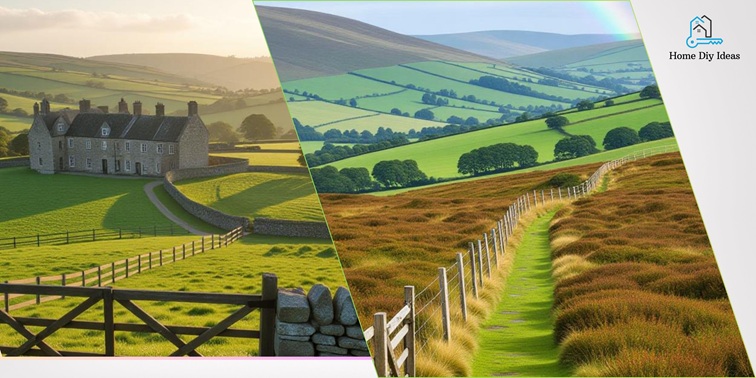

When I first encountered the concept of historic landscape characterisation (HLC) while planning a garden redesign, I realised it was far more than a niche heritage approach. It’s a powerful tool that helps us understand how history, ecology, and design intersect in the landscapes we inhabit. In this post, I’ll explain why HLC matters for today’s landscaping, how it works, and how you can apply it to your own property—whether you manage a large estate or a suburban backyard.
What Is Historic Landscape Characterisation?
Historic Landscape Characterisation is a method of identifying and describing the historic layers, patterns, and uses that have shaped a landscape over time. Instead of focusing solely on buildings or monuments, it looks at the entire landscape—fields, hedgerows, paths, tree lines, water systems, and settlement patterns.
Its core purpose is to understand how places have evolved so that future change can be managed sensitively.
Think of it as giving “time depth” to your property—revealing how past uses, boundaries, and natural features still influence your land today.
Why It Matters for Landscaping Today
1. Strengthening Sense of Place
Understanding the historic layers of your property helps ground your design in a strong sense of identity. A garden or yard that respects old field boundaries or reuses traditional materials feels naturally connected to its surroundings.
2. Smarter Planning and Budgeting
HLC can uncover hidden features—old foundations, drainage lines, or terraces—that could affect your landscaping project. Recognizing them early helps you plan efficiently and avoid costly surprises.
3. Sustainable and Resilient Design
Historic landscapes often evolved from centuries of sustainable practice—such as tree lines planted to prevent erosion or local water management systems. Reviving these principles supports biodiversity, soil health, and long-term ecological balance.
4. Compliance and Heritage Value
Even if you’re not in a conservation zone, aligning with local character can support smoother planning approvals and protect cultural value. It also ensures your design contributes positively to the broader landscape character.
5. Distinctive Aesthetic
Integrating historic cues—like stone walls, native plant species, or traditional patterns—creates a landscape that tells a story. Instead of a generic design, you achieve something uniquely tied to the land’s heritage.
Step-by-Step Guide: Applying HLC to Your Property
Step 1: Research and Record
- Collect historic maps or photos of your area (from archives, libraries, or online databases).
- Walk your property and look for clues: old walls, uneven ground, ancient trees, or remnants of paths.
- Make a simple sketch marking these features.

Step 2: Identify Character Zones
Divide your site into zones based on historic traits and current conditions.
| Zone | Historic Character | Current Condition | Design Implication |
| Front yard | Old path or driveway alignment | Compact, low vegetation | Reuse alignment as gravel walkway |
| Side boundary | Former hedge or field edge | Overgrown shrubs | Reinforce with native hedging |
| Rear garden | Terrace or cultivation strip | Level lawn | Add raised beds echoing field layout |
Step 3: Integrate Character into Design
- Respect alignments — Reuse or highlight old boundaries, tracks, or tree lines.
- Use local materials — Reclaimed stone, gravel, or timber that reflect your region’s heritage.
- Blend old and new — Combine traditional layouts with modern functionality.
- Enhance sustainability — Reuse natural slopes for rain gardens or plant native species that thrive historically in the area.
Step 4: Implement and Maintain
- Phase your project: Begin with survey and hardscape, then planting.
- Document changes: Take before-and-after photos to track how the design respects historical context.
- Maintenance matters: Care for original features—walls, mature trees, and hedges—to preserve authenticity.
- Review yearly: Monitor how new elements blend with old ones and adjust as needed.
Quick Checklist for Homeowners
- Collected historical data on my property
- Identified visible historic landscape features
- Mapped and categorized zones
- Integrated features into my design
- Selected materials consistent with local history
- Created a maintenance and review plan
FAQs: Historic Landscape Characterisation for Homeowners
Yes. Even new developments often sit on land shaped by older agricultural or natural systems. Recognizing these patterns helps you design with better flow, drainage, and character.
Not at all. The idea is to inform, not to replicate. You can use historic cues—like layout, proportions, or plant types—while maintaining a sleek, contemporary style.
A little research at the start may add minimal cost, but it often saves money later by revealing features that could affect grading, irrigation, or construction.
Document it before altering. If it’s significant, integrate or stabilize it as a design feature. This often adds value and character to your landscape.
Landscape architects, archaeologists, or local historical societies can help you interpret maps or advise on preservation-minded design choices.
Conclusion
Historic Landscape Characterisation isn’t about turning your property into a museum—it’s about creating meaningful, resilient, and authentic landscapes that honor the past while thriving in the present. By understanding how your land evolved, you design smarter, conserve resources, and craft a space that truly belongs to its setting.
If you’re ready to discover the story your land wants to tell, take a weekend to walk your property, sketch what you find, and start mapping your landscape’s history.