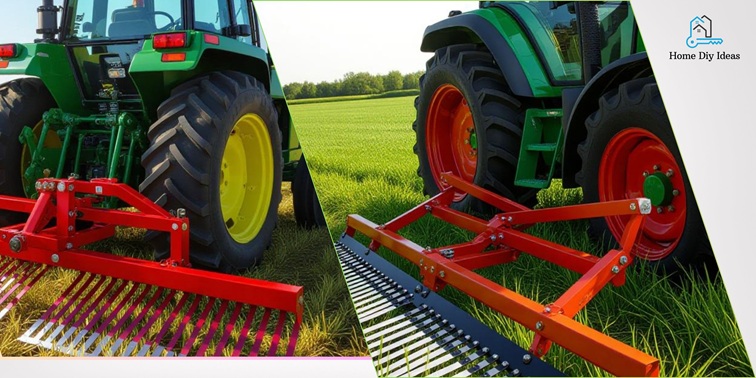

If you’re like me—spending weekend hours maintaining acreage, gravel driveways, or prepping a new garden bed—you know that the right implement makes all the difference. I want to share everything I’ve learned about the landscape rake for tractor so you can make smart choices, avoid common mistakes, and get professional results—whether you’re a homeowner or an aspiring landscaping pro.
What Is a Landscape Rake for a Tractor?
A landscape rake—also known as a rock rake or root rake—is a tractor attachment designed to:
- Pull out roots, rocks, and surface debris.
- Level and smooth soil, gravel, or mulch.
- Prepare land for seeding, sodding, or other landscaping work.
It’s not a digging or earth-moving tool but a finishing implement—perfect for shaping and refining the final grade of your landscape.
Why Use One? (From My Landscaping Experience)
In my years of land maintenance and driveway grading, using a landscape rake for tractor has been a major time-saver. Here’s why:
- Cleaner finish: Removes roots, small rocks, and debris effectively.
- Better grading: Smooths and levels soil or gravel effortlessly.
- Versatility: Works across lawns, trails, paddocks, and driveways.
- Tool protection: Clears materials that could damage mowers or tillers later.
I always attach my rake before seeding or gravel finishing—it’s a small step that saves hours later.
How to Choose the Right Landscape Rake for Your Tractor
Key Specs and What They Mean
| Feature | Why It Matters | Expert Tip |
| Width (working width) | Determines how much ground you cover per pass. | Match width to your tractor’s horsepower and space; wider isn’t always better. |
| Hitch category | Ensures it connects properly to your tractor’s 3-point hitch. | Verify Cat 1 or Cat 2 before buying. |
| Tine spacing and angle adjustment | Controls how aggressively you rake and how fine the finish will be. | Choose close spacing for debris removal and adjustable angles for versatility. |
| Build quality | Affects durability and resistance to bending or wear. | Invest in reinforced steel frames for frequent or heavy use. |
| Gauge wheels / floating top link | Helps maintain consistent depth and prevent over-digging. | Ideal for delicate lawns or uneven terrain. |
Matching to Your Property
- Tractor horsepower:
- Up to 30 HP → Light/compact rake (60–72 inches)
- 30–50 HP → Medium rake (72–84 inches)
- 50 HP+ → Heavy-duty rake (90 inches and up)
- Terrain:
- Flat open land → Wider rake
- Tight or wooded areas → Narrower, more maneuverable model
- Purpose:
- Driveway grading → Medium angle and moderate depth
- Debris removal → Deeper, aggressive tine angle
- Lawn prep → Shallow, smooth setting with gauge wheels
Quick Selection Checklist
- Width suits tractor power and turning radius
- Correct hitch category (Cat 1/Cat 2)
- Adjustable tine angle
- Strong, replaceable steel tines
- Gauge wheels (if needed)
- Good warranty and parts availability
How to Use a Landscape Rake Effectively
Setup
- Attach securely to the 3-point hitch.
- Adjust rake angle and depth before starting.
- Set gauge wheels or top link to desired working height.
- Inspect for debris or obstacles before your first pass.
Operating Tips
- Drive at a steady, moderate pace.
- Use overlapping passes to prevent ridges.
- For leveling gravel, angle the rake slightly forward.
- For debris clearing, set a shallow angle and slower speed.
- On slopes, stay level to prevent gouging or side-pull.
- For finishing, lift slightly and “comb” the surface gently.
After Use
- Clean off dirt and roots immediately.
- Check and straighten any bent tines.
- Lubricate pivot points and inspect bolts.
- Store indoors or on a rack to prevent rust.
Example Rake Categories
| Type | Width | Tractor Power | Typical Use |
| Light-duty | 60 in | Up to 30 HP | Lawn prep, light debris removal |
| Medium-duty | 72–84 in | 30–50 HP | Gravel driveways, moderate grading |
| Heavy-duty | 90 in+ | 50 HP+ | Rock clearing, large property leveling |
Real-World Scenarios
- Gravel Driveway Renewal
After heavy rain, I use a 72-inch rake at a medium angle to pull gravel back into ruts and re-level the surface. It takes an hour—and saves a full truckload of gravel each season. - Lawn Preparation
Before seeding, I run the rake twice: once deep to remove roots, then shallow to smooth the topsoil. The result is an even, debris-free bed. - Trail and Pasture Maintenance
I use a heavier rake for clearing sticks and small roots along trails—keeping them safe for walking and machinery.
Maintenance and Safety Tips
Routine Care
- Clean thoroughly after each use.
- Grease pivots and moving joints.
- Replace worn or bent tines immediately.
- Touch up with rust-preventive spray before storage.
Safety Essentials
- Always disengage the tractor before adjustments.
- Wear gloves and eye protection when handling debris.
Never exceed the rake’s recommended speed or depth.
FAQs Section
The rake is a 3-point hitch and horsepower rating. The rake is a 3-point hitch and horsepower rating.
A box blade moves and levels soil more aggressively; a rake is designed for lighter surface work and finishing.
Inspect each season—replace bent or worn tines promptly to maintain even performance.
Generally, choose a rake slightly wider than your tractor’s rear tires for full coverage without overloading.
Yes—set the depth shallow and drive slowly to avoid disturbing the soil or seed.
Conclusion
A landscape rake for tractor is one of the most versatile tools you can own for property upkeep. It levels, clears, and finishes your land with professional results. The secret lies in choosing the right rake for your tractor and using it with precision.