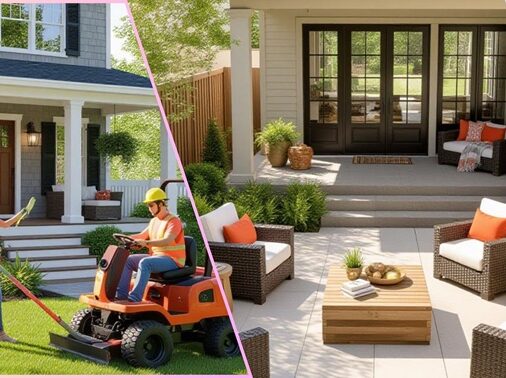
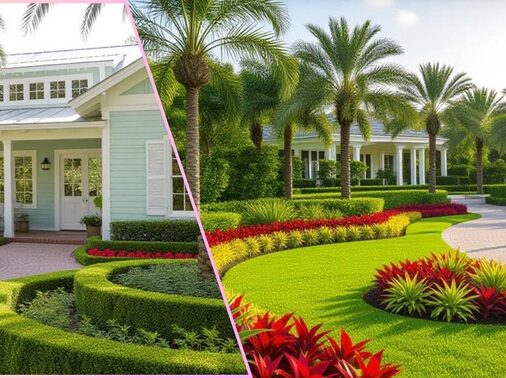
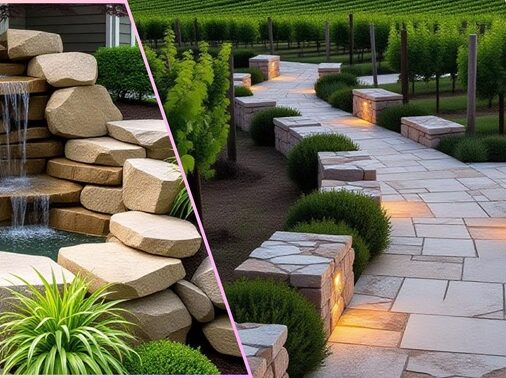
As someone who’s lovingly rebuilt and reimagined my own backyard space, I know there’s something magical about turning a blank or underused patio into a living, breathing retreat. When done right, patio landscaping bridges the indoors and outdoors, creating an extension of your home where you relax, entertain, and reconnect with nature.
In this post, you’ll find expert-level, practical, and actionable ideas—not just pretty photos—for transforming your patio with landscaping that supports function, beauty, and longevity. I’ve also done a content gap analysis of top competitors to ensure you’re getting fresh, deeper value here.
1. Start with a Plan: Vision + Constraints
1.1 Define Your Use Zones (Function First)
Before choosing plants or pavers, map out how you intend to use your patio:
- Seating / dining / grilling zone
- Relaxation nook (e.g. chaise, hammock)
- Pathways / circulation
- Planting beds / containers
- Feature or accent space (firepit, water feature, sculpture)
Sketch your patio footprint and overlay these zones roughly to see conflict or overlap.
1.2 Catalog Site Constraints & Assets
| Factor | What to Note | Why It Matters |
| Sun / shade throughout day | When do certain spots get sun or full shade? | Determines what plants will thrive |
| Drainage / slope / runoff | Where does water go? Any puddling? | To avoid water damage or plant rot |
| Soil type and compaction | Dig a hole and test soil quality | Whether you need soil amendments or raised beds |
| Surrounding architecture / style | Brick, siding color, roof pitch, view angles | To ensure harmony and avoid visual clash |
| Utilities / setbacks / permits | Underground lines, codes, property lines | Limits where you can dig, build, or plant |
1.3 Set Priorities & Budget Tiers
Decide which of these are essential vs. optional:
- Essentials: foundational paving, drainage, hardy structure plants
- Optional splurges: water features, high-end accent stone, outdoor lighting
- Phased additions: break the project into 2–3 phases if budget is tight
Once you have this plan and constraints in mind, you can confidently layer design choices.
2. Hardscape Foundations: The Backbone of Patio Landscaping
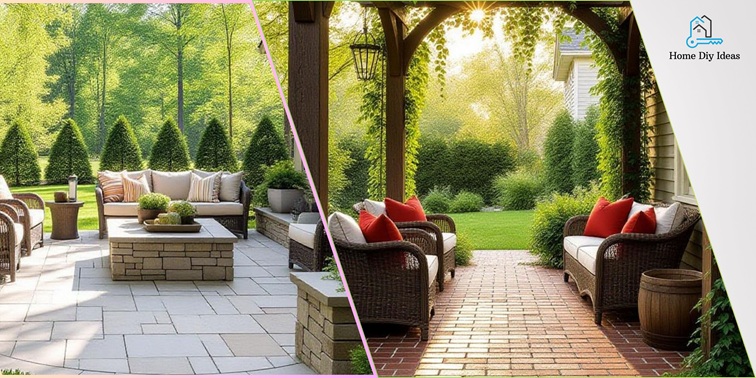
Your hardscape (pavers, pathways, edges, walls) is what gives structure to your patio. Poor hardscape decisions limit planting choices or lead to future repair headaches.
2.1 Choosing the Right Material: Trade-offs & Tips
| Material | Pros | Cons / Considerations | Best Uses |
| Concrete pavers / interlocking units | Durable, many textures & colors | Needs good base prep; can heave in freeze-thaw zones | Main patio flooring, transitional paths |
| Natural stone (flagstone, slate, bluestone) | Rich visual texture, natural aesthetic | Costly, heavy, harder to install | Accent zones, steps, focal areas |
| Porcelain / large-format tiles | Sleek, modern, low porosity | May be slippery (choose anti-slip) | Contemporary patios, low-profile decks |
| Gravel, decomposed granite | Cost-effective, informal, permeable | Needs edging; can shift underfoot | Walkways, filler zones, dry stream beds |
| Brick | Classic, warm tones | More maintenance (weed control), can settle | Heritage homes, cottage-style spaces |
Tip: For main patio surfaces, aim for a “base + bedding + joint system” that ensures longevity. A compacted gravel base, leveling sand, and proper joint fill (sand, polymeric, or gravel) will resist shifting and weeds.
2.2 Patterns, Layouts & Flow
Your layout and pattern communicate style and guide movement:
- Herringbone, basket weave, running bond — classic patterns
- Random flagstone or broken modular — for a natural look
- Banding or borders — use contrasting edge pavers for definition
- Open joints with groundcover (e.g. thyme, Irish moss) for softness
Also ensure flow lines (pathways, sightlines) are logical: focal points should draw you in, and edges should feel resolved.
2.3 Walls, Edging & Transition Elements
These help separate zones, contain soil, and raise visual interest.
- Low stone walls (6–12 inches high) that double as seating
- Gabion baskets or wire mesh with rock for a modern edge
- Wood or steel edging to contain gravel beds or mulch
- Steps and levels — use natural stone or precast concrete for transitions
Always ensure proper footing and drainage behind retaining elements.
3. Planting & Softscape: Bringing Your Patio to Life
Once your hardscape is in place, planting adds the soul—texture, fragrance, and wildlife.
3.1 Plants by Micro-Zone (Sun, Shade, Edge, Container)
| Micro-Zone | Plant Strategies | Good Plant Picks* |
| Full sun border / edge | Drought-tolerant perennials, grasses | Lavender, Salvia, Catmint, Ornamental grasses |
| Partial shade / under cover | Ferns, hostas, shade perennials | Hellebores, Heuchera, Hostas, Astilbe |
| Patio container zones | Mix “thriller, filler, spiller” | Ornamental grass, geraniums, trailing ivy |
| Wall-mounted planters / vertical | Climbing vines, wall herbs | Clematis, Star jasmine, Passionflower |
| Soil-edge buffer zones | Shrubs, small trees for screening | Boxwood, dwarf viburnum, Japanese maple |
* Always check your local growing zone.
Tip: Grouping plants in masses creates stronger visual flow and protects against wind or sun exposure.
3.2 Soil Prep & Planting Best Practices
- Loosen soil twice the root ball width
- Add compost or organic matter (20–30%)
- Mulch (2–3 inches) to conserve moisture and suppress weeds
- Use drip irrigation for deep watering
- Leave room for plant growth
3.3 Year-Round Interest & Seasonal Rotation
Plan for four-season beauty:
- Spring: bulbs, early bloomers (daffodils, tulips)
- Summer: flowering perennials, annual color
- Autumn: grasses, foliage tones
- Winter: evergreens, bark texture, sculptural forms
Add container swaps to refresh the look seasonally.
4. Lighting, Irrigation & Finishing Touches
4.1 Lighting for Ambience & Safety
- Pathway / step lights for safety
- Accent lighting to highlight trees or features
- String or bistro lights for atmosphere
- In-ground lights for soft glow
- Choose warm LED tones (2700K–3000K) for comfort
4.2 Irrigation & Water Management
- Use zoned drip systems to save water
- Add moisture sensors to avoid overwatering
- Ensure drainage slopes away from structures
- For water features: use filtered recirculating pumps
4.3 Decorative Layers & Accessories
- Planters and containers that echo patio materials
- Textural accents: stones, driftwood, or boulders
- Water features (fountains or bubbling urns) for sound
- Outdoor textiles: rugs, cushions, lanterns for personality
5. Maintenance & Longevity: Keep It Looking Fresh
Seasonal Maintenance Checklist
| Season | Tasks |
| Spring | Clean pavers, re-sand joints, mulch refresh, prune, inspect irrigation |
| Summer | Water deeply, deadhead flowers, control weeds |
| Fall | Trim perennials, remove leaves, prep for frost |
| Winter | Cover furniture, inspect for cracks, protect tender plants |
Longevity Tips
- Use polymeric sand for weed-free joints
- Seal stone surfaces periodically
- Choose native or adaptive plants
- Refresh one area each season rather than full overhaul
6. Example Design Walkthrough & Checklist
Here’s a quick real-world project flow you can follow:
- Measure and sketch your space
- Identify use zones (dining, lounging, pathways)
- Choose hardscape material and pattern
- Add low walls or edging for structure
- Plan planting zones based on sun exposure
- Install lighting and irrigation before surface finish
- Add plants, mulch, and containers
- Final touches—furniture, décor, lighting test
- Maintain seasonally
FAQ — Homeowner Questions About Patio Landscaping Ideas
Leave at least 36–42 inches around furniture for movement. Keep patio size proportional to your yard.
Absolutely. Use vertical gardening, compact furniture, and layered plantings for depth.
Go for lavender, rosemary, sedum, ornamental grasses, or succulents. Mulch and drip irrigation help conserve water.
Install a weed barrier, use tight joints with polymeric sand, and maintain annually.
DIY works for smaller patios, but consult a pro for structural builds, drainage, or water features.
Generally $10–$50 per sq ft, depending on materials and complexity. Always get multiple estimates.
Conclusion
Creating a patio that feels alive isn’t about copying a trendy design—it’s about layering function, texture, and sustainability. The right combination of hardscape, planting, and lighting turns any outdoor area into a personal retreat that adds lasting value to your home.