

Lighting can completely transform the way a garden feels after sunset. As someone who’s spent years experimenting with outdoor designs, I’ve found that LED landscape lights are not just about illumination—they’re about creating atmosphere, saving energy, and adding long-term value to your landscape.
Let’s explore how to use LED lights smartly to make your garden glow efficiently and beautifully.
Why Choose LED Landscape Lights?
LED (Light Emitting Diode) technology has reshaped the outdoor lighting industry. Unlike old halogen or incandescent fixtures, LEDs use minimal energy while producing brighter, more consistent light.
Here’s why professionals and homeowners alike are switching to LEDs:
- Energy Efficiency: Up to 80% less energy use than traditional bulbs.
- Long Lifespan: Most last between 25,000–50,000 hours.
- Low Heat Output: Safe around plants and pathways.
- Durability: Designed to withstand weather and temperature changes.
- Eco-Friendly: Contain no toxic materials and reduce carbon footprint.
| Comparison | LED Lights | Halogen Lights | Incandescent Lights |
| Energy Use | Very Low (up to 80% less) | Moderate | High |
| Lifespan | 25,000–50,000 hrs | 2,000 hrs | 1,000 hrs |
| Heat Output | Cool | Hot | Very Hot |
| Maintenance | Minimal | Frequent | Frequent |
| Cost Over Time | Low | High | Very High |
Types of LED Landscape Lights for Modern Gardens
To design an energy-efficient, stylish landscape, choose lights that match your garden’s layout and purpose.
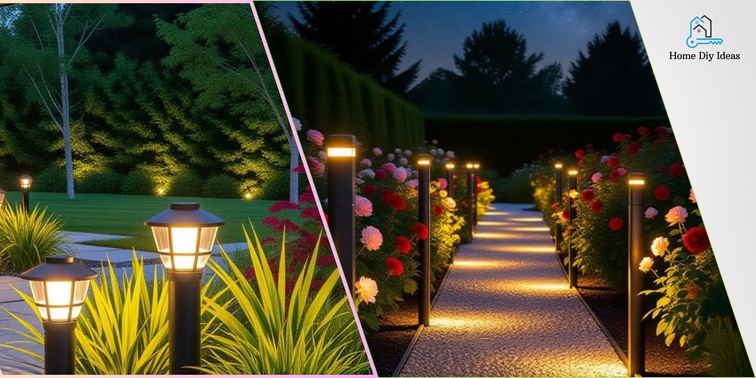
1. Pathway Lights
Perfect for driveways, garden paths, or walkways.
- Ideal height: 18–24 inches.
- Best for safety and soft, downward illumination.
2. Spotlights and Uplights
These highlight trees, sculptures, or architectural features.
- Use narrow beam (15–30°) for focal points.
- Position at the base of features for dramatic upward lighting.
3. Floodlights
Provide wide coverage for large areas like lawns or patios.
- Look for adjustable beam angles and motion sensors for efficiency.
4. Step and Deck Lights
Increase safety on stairs and decks while adding modern flair.
- Install recessed or under-rail options for a clean finish.
5. Solar LED Lights
Combine sustainability with ease of use.
- Best for low-traffic or decorative zones.
- No wiring required—great for DIY upgrades.
Design Tips: How I Plan LED Lighting Layouts
When I design landscapes, lighting is never an afterthought. Here’s my go-to checklist to get it right every time:
✅ LED Landscape Lighting Checklist
- Identify dark spots and high-traffic areas.
- Choose warm (2700K–3000K) color temperatures for cozy ambiance.
- Mix fixture types—path, spot, and accent—for balance.
- Use timers or smart controllers for automatic scheduling.
- Ensure waterproof ratings (IP65 or higher) for outdoor use.
- Avoid light pollution—aim lights downward or shield beams.
A balanced layout typically follows the “rule of thirds”—lighting one-third of the landscape strategically to create depth and drama without overpowering it.
Energy-Saving Tips for LED Landscape Lights
Even though LEDs are efficient, a few design tricks can reduce consumption further:
- Use Smart Controls: Wi-Fi or Bluetooth-enabled systems let you dim or schedule lights remotely.
- Opt for Motion Sensors: Ideal for entryways and driveways.
- Install Solar-Powered LEDs: Reduce grid dependency completely.
- Regular Maintenance: Clean lenses and check for dirt buildup to maintain brightness.
Common Mistakes to Avoid
Many homeowners make lighting decisions without proper planning. Avoid these pitfalls:
- Overlighting: Too many fixtures can make your garden feel harsh and artificial.
- Ignoring Angles: Improper positioning leads to glare and wasted energy.
- Mismatched Color Temperatures: Keep tones consistent to maintain harmony.
- Skipping Professional Advice: A quick consultation with a landscape designer can make a big difference.
Frequently Asked Questions (FAQs)
Quality LED fixtures can last 10–15 years depending on usage and weather exposure.
Yes. Most modern LED systems are dimmable if you use compatible transformers and controllers.
Outdoor-rated LEDs come with IP65 or higher protection, ensuring they resist rain and dust.
Aim for 100–200 lumens for pathways and 300–600 lumens for focal lighting like trees or facades.
Less than traditional bulbs! LEDs emit minimal UV light, which insects find less attractive.
Conclusion
Switching to LED landscape lights is one of the smartest upgrades you can make for your outdoor space. You’ll enjoy a beautifully illuminated garden, reduce energy bills, and contribute to a greener environment—all while adding nighttime charm to your property.


