

When I first tackled my own property’s overgrown borders, I discovered that metal landscape edging does more than define space—it transforms a yard from messy to magnificent. If you’ve ever been frustrated by mulch spilling into the lawn or grass creeping into your flower beds, this guide is for you.
In this article, I’ll walk you through durable metal edging options, design techniques, and step-by-step installation insights you can trust (because I’ve tested many in my own garden). Let’s dig in—literally—and give your landscape that crisp, professional edge.
Why Choose Metal Landscape Edging?
Durability & Long-Term Performance
- Unlike plastic or wood, metal does not warp, crack, or degrade under UV exposure.
- Steel and corten options resist shifting even under mowing, thanks to uniform thickness and strength.
- With proper coating (e.g., powder coat, galvanization), metal edging can resist rust for decades.
Clean Aesthetic & Sharp Lines
Metal edging offers a slim profile and crisp silhouettes that don’t compete visually, helping feature plants, paths, and lawn edges without distraction.
Functional Benefits
- Contains mulch, gravel, and soil, preventing spillover.
- Acts as a root barrier to slow grass encroachment.
- Withstands mower wheels and trimming tools without damage.
Types of Metal Edging: Pros, Cons & Best Uses
| Metal Type | Key Advantages | Potential Drawbacks | Best Use Cases |
| Galvanized / Powder-Coated Steel | High strength, resists bending, long life | Heavier, potential rust if coating cracks | Long straight runs, high-traffic zones |
| Corten (Weathering Steel) | Develops rustic patina, corrosion-resistant over time | Takes time to “weather in” | Natural, industrial, or modern gardens |
| Aluminum | Lightweight, easier to bend, doesn’t rust | Less rigid, more prone to denting | Curved beds, decorative edges |
| Stainless / Copper | Premium look, resistance to oxidation | High cost | Feature edges, architectural accents |
Pro Tip: Blade thickness or gauge matters—lower gauge = thicker metal. For sturdy edging, many experts recommend 11-gauge or 12-gauge in critical zones.
Step-by-Step: Installing Metal Landscape Edging
Below is a practical, do-it-yourself workflow that I often follow in my own yard.
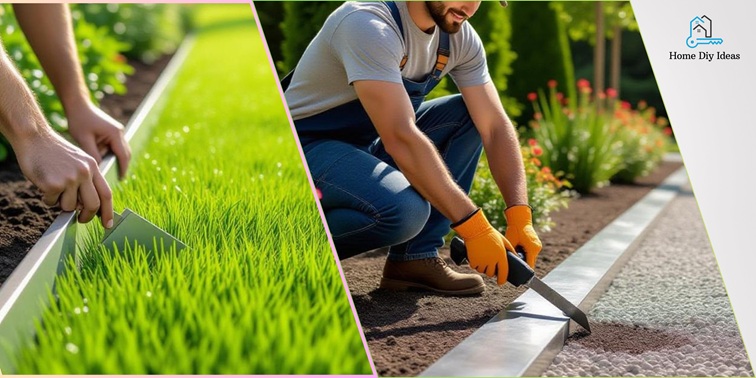
Pre-Work: Planning & Layout
- Sketch your borders — Use graph paper or a yard layout app to outline bed perimeters, curves, and transitions.
- Measure perimeters — Add extra (5–10%) for overlaps, cutting waste, and corners.
- Select edging specs — Choose your metal type, height (e.g., 6″, 8″, 12″), and gauge based on how much material you’ll retain.
- Buy stakes, connectors, corners — Manufacturers often sell matching components.
Day 1: Mark & Dig
- Use string and stakes or spray paint to trace your desired line.
- Dig a trench — typically 2–3″ deeper than the desired finished height. (If using 8″ edging, dig ~10″ deep).
- Remove loose soil, and level the bottom as much as possible.
Day 2: Embed & Connect
- Start at a corner or straight run — Place your first edging strip into the trench.
- Connect the next strips — Use the locking system or connectors; ensure overlap or flush fit.
- Add stakes — Drive stakes through holes into firm soil, aligning the edges as you go. Use a rubber mallet with a wood block to protect the finish.
- Shape curves — For gentle curves, bend metal gradually. For tighter turns, cut small relief slots or use corner pieces.
- Backfill — Replace soil, compact a bit, and tamp against edging to secure.
Day 3: Final Adjustments & Finish
- Check for level misalignments and tap down high spots.
- Trim off excess overhang or rough edges.
- Add mulch, gravel, or planting beds right up to the edging.
- Monitor the edging over the first few weeks for settling; re-tap stakes if needed.
Landscaping Ideas & Design Insights
Here are creative ways to integrate metal edging into your yard:
- Contrast borders: Use black or corten edging to frame lighter gravels or stones for dramatic contrast.
- Grade transitions: Step edging levels down terraces or slopes to create visual interest.
- Split-path emphasis: Use edging on both sides of a path to create a crisp, formal walkway look.
- Island beds: Ring around tree islands or shrubs for a neat, contained feel.
- Mixed materials: Combine metal edging with pea gravel or pavers for a layered modern effect.
Pro Tip: Lay edging so mower wheels ride flush with the top—no vertical lip to hit your blades.
Maintenance & Troubleshooting Checklist
- Check stakes annually—loosened ones can be re-driven.
- If coating chips, spot-prime and spray-rust preventer.
- Over time, soil settlement may require pushing the edging down again.
- In winter climates, inspect for frost heave and adjust.
- Avoid leaning heavy objects against thin edging, which can dent or deform.
FAQ — Common Questions on Metal Landscape Edging
It can if its protective coating is compromised. Using powder coat, galvanization, or corten steel helps resist rust. Occasional touch-ups reduce exposure.
Some “no-dig” systems exist with sharp blades and spikes, but complete soil retention requires embedding, especially for heavy materials.
Usually 2–3″ deeper than finished height (e.g., for 8″ edging dig ~10″). This allows for soil compaction and stability.
For functional edges, 11–12 gauge is common. Decorative-only edges can use thinner (14-gauge).
Bend gently, use preformed corner pieces, or cut relief slots in the backside of strips and fold.
Properly installed edging (with slight gap at bottom or weep area) shouldn’t block water flow. Always allow a slight grade away from beds if needed.
Conclusion
Metal landscape edging offers a perfect blend of durability, aesthetics, and performance. Whether you’re framing flower beds or defining walkways, it brings a clean, lasting finish to your yard.
With the steps, design ideas, and maintenance tips above, you can confidently choose and install the right metal edging system for your space.


