

As a landscape professional, I’ve seen how the right lighting can transform an outdoor space from ordinary to unforgettable. One of the simplest, most sustainable ways to achieve that transformation is with solar landscape lighting. It’s cost-effective, eco-friendly, and easier to install than wired systems — all while creating an inviting glow that makes your yard usable and beautiful at night.
In this guide, I’ll share expert insights and original ideas to help you plan, design, and maintain a solar lighting setup that’s both stunning and sustainable.
Why Choose Solar Landscape Lighting?
Benefits
- No wiring required: Easy, DIY-friendly installation without trenching or cables.
- Eco-friendly: Uses renewable solar energy and reduces electricity costs.
- Flexible: You can easily reposition lights as your landscape evolves.
- Low maintenance: Minimal upkeep — just keep panels clean and batteries in good condition.
- Enhanced safety & appeal: Illuminates pathways, steps, and key features for better visibility and curb appeal.
What to Watch Out For
- Sunlight exposure: Solar lights need 6–8 hours of direct sun for full performance.
- Battery quality: Choose lights with high-capacity batteries for longer runtime.
- Build quality: Look for weatherproof (IP65+) and rust-resistant fixtures.
- Design balance: Avoid random placement; plan lighting layers for both function and aesthetics.
Planning Your Solar Lighting Scheme
Define Your Goals
Ask yourself:
- What areas do I want to highlight or illuminate (pathways, trees, patio, facade)?
- What atmosphere am I going for — cozy, dramatic, or purely functional?
- How much sunlight do key zones receive daily?
- What’s my budget and maintenance comfort level?
Assess Sunlight and Site Conditions
- Observe your yard at different times of day to see where sunlight hits.
- Avoid shaded areas under dense trees or structures.
- Plan for plant growth — trees and shrubs can create shade over time.
Develop a Lighting Layout and Layering Strategy
Professional landscapers use a layered lighting approach:
| Layer | Fixture Type | Purpose |
| Ambient | Solar string lights, globe stake lights | General soft illumination |
| Accent | Solar spotlights or uplights | Highlight trees, art, or architecture |
| Path/Safety | Low-profile stake or step lights | Light pathways and stairs safely |
Choose the Right Hardware
- Lumen Output: Higher lumens for accents, lower for pathways.
- Battery & Panel Size: Larger panels mean longer runtime.
- Color Temperature: Warm white (2700–3000 K) for cozy ambiance.
- Durability: Choose weatherproof, rust-resistant fixtures.
- Flexibility: Adjustable heads or mount options add design control.
Solar Landscape Lighting Ideas
Pathways and Steps
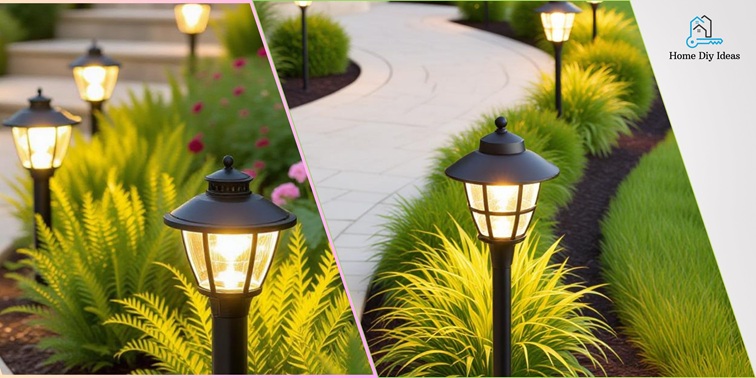
Solar stake lights along paths create safety and a welcoming glow.
- Space lights evenly on alternate sides of the walkway.
- Use low-level lights to prevent glare.
- Consider solar step lights for stairs or transitions.
Uplighting Trees and Shrubs
Highlight your landscape’s natural beauty.
- Place solar spotlights at the base of trees or large plants.
- Angle beams upward at 45°–60° to emphasize texture and form.
- Choose warm light for a natural effect.
Outdoor Living and Seating Areas
Make your patio or deck usable after dark.
- Use solar string lights overhead for soft ambiance.
- Add solar lanterns on tables or posts.
- Combine solar with wired lighting for versatility if you have nearby power access.
Garden Beds and Borders
Bring depth and drama to your garden beds.
- Hide small stake lights in plantings to softly illuminate foliage.
- Try decorative solar “firefly” or globe lights for a whimsical touch.
- Use wall-mounted solar lights to highlight borders or fences.
Fence Caps and Architectural Highlights
- Add solar cap lights to fence or deck posts for an elegant outline.
- Use solar wall washers or uplights to showcase architectural features or sculptures.
- Create a cohesive look by repeating styles and colors across your yard.
Sustainable Maintenance Checklist
Keep your solar lighting efficient and long-lasting with these simple habits:
- Clean solar panels monthly to remove dust and debris.
- Trim branches that block sunlight from reaching panels.
- Check and replace batteries when performance drops.
- Store or protect fixtures in harsh winter conditions.
- Recycle old batteries and panels responsibly.
- Use motion sensors or timers to extend battery life.
- Document your layout for easy future adjustments.
Cost, ROI, and Environmental Impact
Solar lighting delivers excellent long-term value:
- Lower installation costs: No trenching or electrical labor required.
- Zero energy bills: Powered entirely by the sun.
- Minimal maintenance: Occasional cleaning and battery replacement.
- Eco-friendly: Reduces carbon footprint and promotes renewable energy use.
- High aesthetic ROI: Enhances enjoyment, safety, and property value.
FAQs Section
Most high-quality models will run 6–8 hours after a full charge, depending on brightness settings and sunlight exposure.
Yes. A hybrid system gives you flexibility — use solar for remote areas and wired lights for task-heavy zones.
Warm white (2700–3000 K) is most inviting and natural for residential landscapes.
Quality fixtures typically last 3–5 years; replacing batteries every 1–2 years keeps them performing well.
Place lights in sunnier zones or use models with larger panels and higher battery capacity. You can also mix in low-voltage wired options.
Conclusion
If you’re ready to brighten your yard sustainably, solar landscape lighting is a smart, stylish, and responsible choice. With thoughtful planning, layered design, and durable fixtures, you can create an outdoor space that glows beautifully — powered entirely by the sun.
Start small: illuminate a path, spotlight a favorite tree, or string up solar lights on your patio. You’ll see firsthand how this eco-friendly upgrade transforms not just your yard, but your evenings outdoors.


