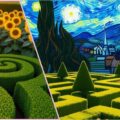
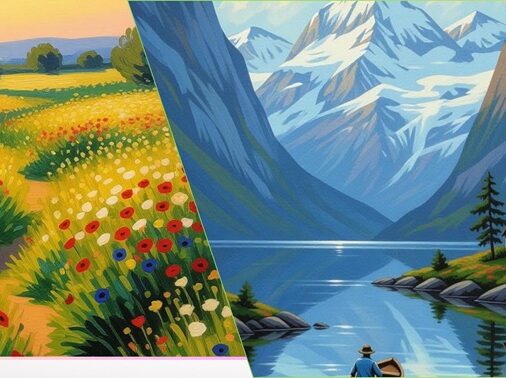
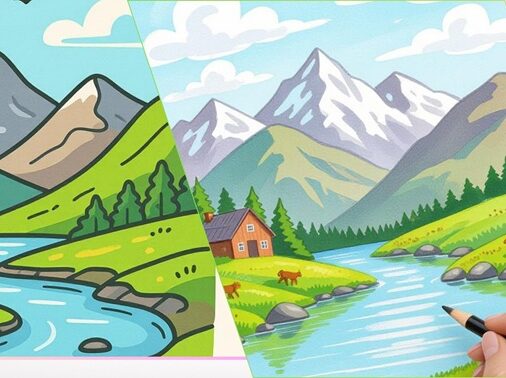
When I first gazed upon Vincent van Gogh’s sweeping wheat fields and olive groves, I didn’t just see color—I saw the living spirit of the outdoors. As both an art admirer and landscape designer, I began asking myself:
What if my garden could reflect the emotional power of a Van Gogh painting?
In this article, I’ll explore Van Gogh’s outdoor masterpieces and translate their visual energy into step-by-step landscaping design insights. Whether you have a small patio or a spacious backyard, you’ll discover how to transform your outdoor space into a living canvas inspired by the master of expressive landscapes.
1. Why Van Gogh’s Landscapes Matter to Gardeners
1.1 Artistic Legacy and Outdoor Vision
- Van Gogh captured nature in motion—windblown fields, swirling skies, and textured horizons.
- His use of bold color contrasts and strong directional lines makes his work timeless.
- For modern landscapers, his art provides a template for designing spaces full of rhythm, texture, and emotion.
1.2 Applying His Vision Outdoors
- Think of your yard as a canvas.
- Use contrasting shapes and colors to create visual energy.
- Frame vistas and horizons that invite the eye to travel, just like Van Gogh’s open skies and winding paths.
- Choose plants that sway, bloom, and move—bringing life to stillness.
Step-by-Step Landscaping Ideas Inspired by Van Gogh
Step 1: Visual Inventory and Inspiration
- Take photos of your yard from different angles.
- Identify open versus enclosed areas.
- Note where light changes throughout the day.
- Choose one or two Van Gogh landscapes that resonate with you—such as his Wheatfield, Olive Trees, or Cypresses—and use them as visual guides.
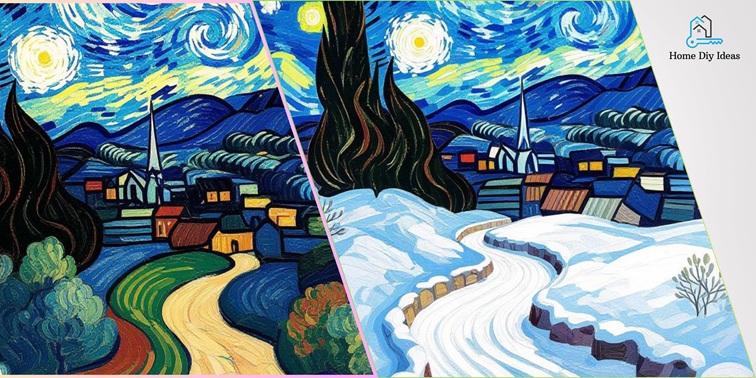
Step 2: Define Your Palette and Textures
| Van Gogh Principle | Landscaping Translation |
| Bold complementary colors (blue/yellow, orange/green) | Select one accent color in plants or hardscape; balance with calming neutrals. |
| Dynamic brushstrokes suggesting movement | Use grasses, shrubs, or groundcovers that sway in the wind. |
| Emphasis on sky and horizon | Keep a low front layer, adding vertical height only in the back. |
Step 3: Layout Planning
- Checklist for layout success:
- Define a foreground (seating, path, or lawn).
- Create a midground (beds, grasses, or color layers).
- Add a background (trees, vertical elements, or open sky).
- Define a foreground (seating, path, or lawn).
- Example: Patio → flowing grasses (midground) → cypresses or slim palms (background).
- Add a focal feature such as a tree, sculpture, or pond—just as Van Gogh used strong focal points in his paintings.
Step 4: Hardscape and Planting Integration
- Hardscape: Use organic curves rather than rigid lines for paths or borders.
- Planting Layers:
- Structural plants (trees, shrubs) for form.
- Movement plants (grasses, perennials) for rhythm.
- Accent plants (bright colors) for emotion.
- Structural plants (trees, shrubs) for form.
- Keep negative space—Van Gogh’s fields were open, not crowded.
Step 5: Seasonal and Maintenance Planning
- Choose plants that maintain texture across seasons.
- Maintenance checklist:
- Prune regularly to enhance structure.
- Refresh color accents seasonally.
- Clean hardscape and lighting for year-round appeal.
- Prune regularly to enhance structure.
- Include subtle outdoor lighting to create dramatic dusk effects reminiscent of Van Gogh’s twilight tones.
Actionable Design Insights Checklist
✔ Establish a strong horizon or vertical focal line.
✔ Combine one bold accent color with neutral greens or grays.
✔ Integrate plants that move naturally in the wind.
✔ Use pathways and seating areas to create visual flow.
✔ Maintain open spaces for balance.
✔ Plan for seasonal texture and long-term growth.
✔ Introduce one artistic focal point—tree, stone, or sculpture.
✔ Design for light: day and evening aesthetics.
FAQ – Van gogh landscape
Absolutely. Focus on depth and composition rather than size. Use vertical plants and single color accents to create a sense of openness.
Apply Van Gogh’s principles of texture and contrast, not his exact plant species. Use local grasses and flowers that thrive naturally.
Not necessarily. Use drought-tolerant or native plants for minimal upkeep. The art-inspired look relies more on layout and color than constant care.
Select a hue that complements your home’s exterior—then contrast it with neutral surroundings for visual balance.
Conclusion
Van Gogh’s landscapes remind us that nature isn’t static—it moves, breathes, and speaks.
By channeling his expressive use of line, color, and composition, your garden can become more than a backyard—it becomes a living artwork.